

The Independent Caregiver
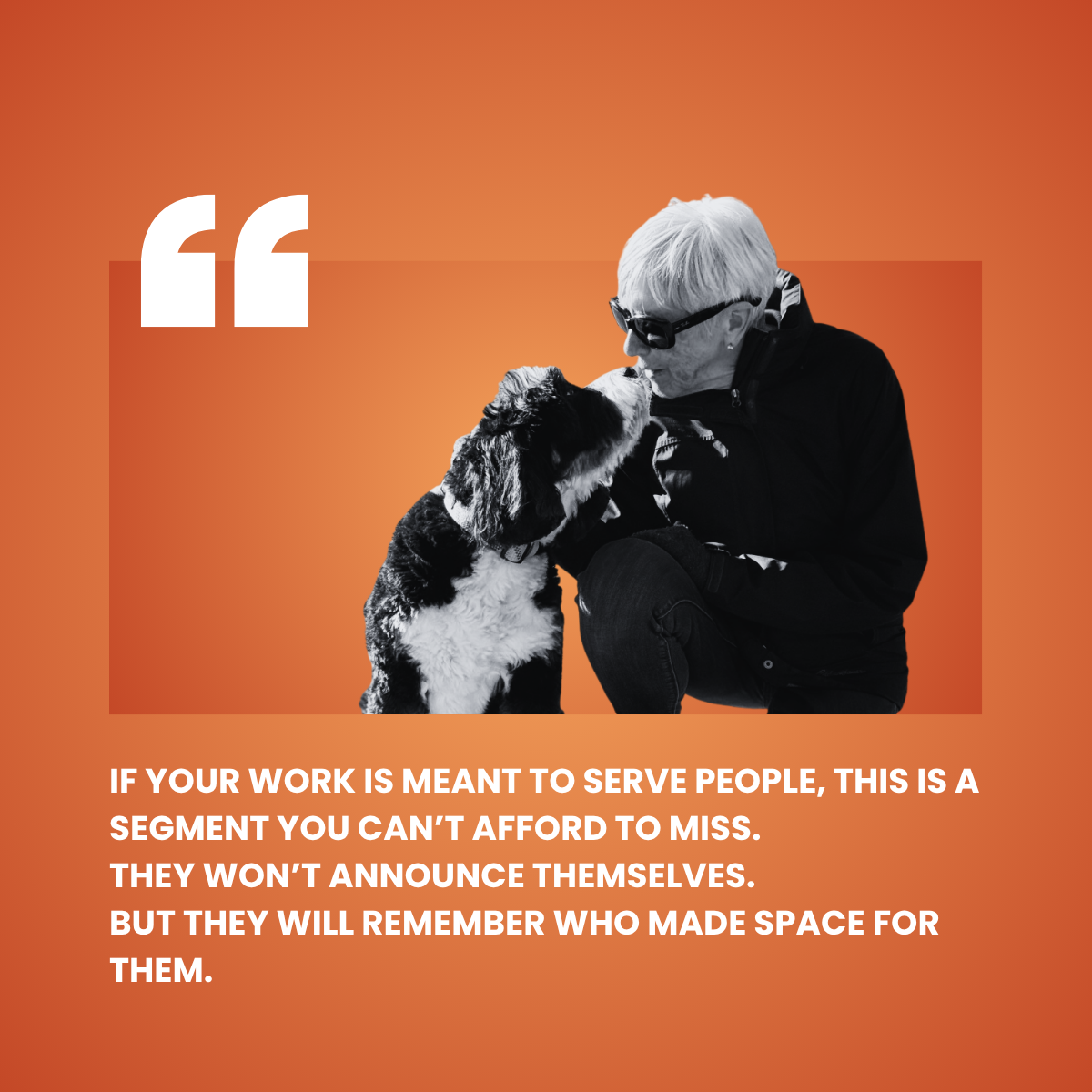
A major growth segment is reshaping spending decisions across industries. Most organizations are not measuring it, planning for it, or building for it.
By Sheryl Johnson | Strategic Inclusive Marketing
There is a decision-maker operating in millions of households who most brand strategists have never formally modelled. This stakeholder does not appear in traditional buyer personas. They are not captured in census family-structure data. They do not fill out preference surveys or attend focus groups.
But they determine where money flows, which brands earn entry into the home, and how loyalty — or its withdrawal — is decided.
Understanding who this stakeholder is, and why they matter now, is one of the more consequential strategic questions facing consumer-facing industries over the next decade.
The Structural Shift Brands Keep Misreading
Most market research still anchors to a household architecture that no longer reflects Canadian reality.
Consider the actual numbers: 58 percent of Canadian households now include a cat or a dog. Thirty-five percent are dog-led. More than one in four Canadian households is a single-person home — a proportion that continues to rise as birth rates reach historic lows and the population ages. These are not marginal demographic shifts. They are structural reconfigurations of how people organize their daily lives, allocate their resources, and assign emotional focus.
The strategic error most organizations make is treating these shifts as separate trends — a pet industry story here, a solo economy story there, an aging demographic report somewhere else. They are not separate. They are the same story, told from different views.
When birth rates fall, the emotional dividend does not disappear. It reallocates. When households contract to a single occupant, the architecture of dependency does not dissolve. It reorganizes around what — and who — remains.
In a solo-occupancy household, the dog is not a lifestyle accessory. The dog is the only other stakeholder.
Why This Is Not a Pet Segment
The instinct among brand and category teams is to route this insight to the pet marketing vertical and move on. That is precisely the wrong response — and it reveals the category-bound thinking that limits strategic reach.
This is not a pet segment story. It is an agency shift story.
A segment describes a group of consumers who share purchasing behaviour within a category. What we are describing is something more fundamental: a change in how a household operates, how decisions are weighted, and what values govern spending across every category that household touches.
Automotive. Financial services. Insurance. Pharmaceuticals. Apparel. Travel. Real estate. Retail. Each of these industries has a version of the same blind spot: they are designing for a household structure that an increasing share of their highest-value customers no longer share.
The question is not whether to serve pet owners better. The question is whether you understand the household well enough to serve it at all.
The High-Attachment Psychographic: Independent Caregiving
To a casual observer, the “Dog Mom/Dad” identity reads as a niche — cute, perhaps excessive, ultimately peripheral to strategic business growth.
To a strategist, it is a high-attachment psychographic demonstrating consistent behaviour. Call it Independent Caregiving.
These consumers do not “own” a dog in any conventional property sense of the word. It's about a give-and-take relationship, built on obligation, being in tune, and responsibility. They schedule errands around exercise, meal and attention windows. They audit ingredient lists with the scrutiny of a clinical researcher. They celebrate developmental milestones. They make interior design choices based on their companion’s comfort rather than their own aesthetic preferences.
What makes this psychographic commercially significant is the “non-discretionary” mindset that governs it. These are consumers who will delay their own medical appointments, cancel travel arrangements, or decline high-value social engagements if the safety or comfort of their dependent cannot be guaranteed. They are not making irrational trade-offs. They are operating within a clear hierarchy of obligation — one that brands largely fail to recognize.
The phrase “it’s just a dog” is not merely an empathy failure. It is a strategic intelligence failure. It signals a fundamental misunderstanding of a household in which trust, safety, and responsibility govern every significant purchase decision. Brands that use this framing — explicitly or implicitly — lose more than a sale. They lose consideration.
The Crucible: Why This Loyalty Is Different
Many of the most committed bonds between human and canine companion were forged during what might be called the Crucible: divorce, grief, burnout, the departure of children from the family home, the pandemic. These were moments of profound structural disruption — times when the routine of daily life collapsed and had to be rebuilt.
In many of those reconstructions, the companion was the grounding. Not a coping strategy. Not a distraction. The actual stabilizing relationship around which a new routine was organized.
This origin matters commercially because it means the loyalty these consumers extend to brands that genuinely serve their household is not transactional. It is not price-sensitive in the conventional sense. It is relational. It has been earned against a backdrop of real vulnerability. And it is extraordinarily committed when maintained — and extraordinarily difficult to recover when broken.
If you understand this consumer, you understand the opportunity of loyalty coupling, which will be difficult, if not impossible, to break.
The Cross-Category Business Case
What follows is not a pet marketing brief. It is a household strategy — applied across industries
Automotive and EV
The industry default is to place a golden retriever in a car window and call it dog-friendly marketing. This misses the point entirely.
The opportunity is Cargo Architecture: interiors designed for durability against fur and moisture, safety systems calibrated to recognize non-human occupants, loading configurations that account for mobility limitations in older animals. It is charging infrastructure sited near green spaces, not retail anchors. It is a vehicle that communicates lifestyle utility, not aesthetic aspiration.
This is not pet marketing. This is designing for how the vehicle actually gets used.
Financial Institutions and Insurance
Veterinary costs represent one of the fastest-growing unplanned expense categories for Canadian households. Emergency veterinary intervention can exceed ten thousand dollars. For a high-attachment caregiver in a single-income household, this is not a discretionary financial event — it is a crisis.
Wealth management tools that fail to account for this type of caregiving are incomplete models of their customers’ actual financial lives. Emergency fund planning that excludes veterinary contingency is, for a significant share of clients, misleading. Pet insurance positioned as an optional add-on rather than a core pillar of household financial budgets, reflects a product architecture built around a family model that no longer describes the customer.
Pharmaceuticals and Health
The caregiving load carried by solo-occupancy, high-attachment households is substantial and largely invisible to health systems. These are individuals managing their own health while simultaneously managing that of a dependent — often with limited support infrastructure.
Plain-language side-effect communication matters differently to someone who cannot afford cognitive impairment on a day when the dependent’s needs are urgent. Refill ecosystems designed without regard for the complexity of various health management needs, create friction for a growing share of the population.
The insight here is not about dogs. It is about designing for the actual mental and logistical load your customer is carrying.
Apparel and Retail
The active caregiver does not dress for the influencer brunch. They dress for the 6 a.m. park run, the muddy trail return, the afternoon errand loop conducted in weather that does not pause for fashion.
Durable, washable, movement-ready technical wear designed for this context is not a niche product. It is a response to a daily reality that a significant and growing share of premium consumers actually live. Community-driven activations — urban pack walks, training events, neighbourhood-scale gatherings — reflect how this consumer actually spends a Saturday morning. They outperform aspirational lifestyle imagery because they are real and reflect their lifestyle.
What This Requires of Strategy
None of what has been outlined here requires a dog in the hero shot.
It requires something more demanding: internalizing the life. Understanding not just what this household buys, but how it is organized, what values govern its decisions, where its vulnerabilities lie, and what it would mean to be genuinely useful to it across a range of categories and moments.
Canada’s demographic shifts are rewriting the definition of family. They are rewriting the architecture of the household. They are rewriting the emotional logic of loyalty. Organizations that treat these shifts as background context — interesting but not strategically urgent — are making a compounding error. The segment they are underserving is not peripheral. It is among the fastest-growing, highest-attachment, most cross-category-influential consumer cohorts in the market.
The question is not whether to reach them. Most organizations already do, at some level.
The question is whether you are building for the weight they carry.
Three Questions for Leadership
Before the next brand planning cycle, three questions worth putting to the room:
1. Does our household model reflect actual Canadian household composition? If your customer personas are built around coupled, child-present households, what share of your actual high-value customers does that model now exclude?
2. Are we designing for how this household actually operates, or for how it used to? Utility, durability, safety, and emotional congruence are the values that govern purchase decisions in high-attachment households. Aspiration and status are secondary at best.
3. What would it mean to be genuinely trustworthy to this stakeholder? Trust, in the high-attachment household, is not earned through brand affinity. It is earned through demonstrated understanding of the household’s obligations — and consistent delivery against them.
The organizations that answer these questions well will not need to chase this segment. They will have built the conditions under which it finds them.
-----
Sheryl Johnson works at the intersection of inclusive marketing strategy and demographic intelligence. This article draws on consumer behaviour research, Statistics Canada household data, and field observation across the automotive, financial services, and consumer goods sectors.
